Maybe everyone has a book in them, but not everyone should write a book.
That's one of the lessons I learned attending the Publishing Institute at the University of Denver 6 years ago.

The program was designed to give people fresh out of college or those looking to change careers, as I was at the time, an in-depth look at the publishing industry. I did that while spending time in the beautiful and humidity-free Mile High City, where I could see the Rocky Mountains every day, and had the opportunity to hang out for most of the summer with my sister and her girls, who live there.
But anyway, at DPI, while not enjoying the weather, mountains, and my beautiful and hilarious nieces, we studied marketing, promotion, book cover design, literary agency, magazine and journal publishing, and sales, the big focus of the 6-week summer program was on editing and book publishing.
Book editors, in the course of their work, read a lot of duds. The volume of manuscripts that come across their desks is staggering. And much of it is crap.
To unearth a true gem of a book - a bestseller, even - in the slush pile (unsolicited manuscripts) is a very rare occurence indeed. Which is why authors must work with a literary agent to determine whether publication is feasible and, if so, to help them find someone to publish their manuscript.
Which is what makes it so remarkable for an author to have a first novel published. To have it quickly become a bestseller is rather astonishing.
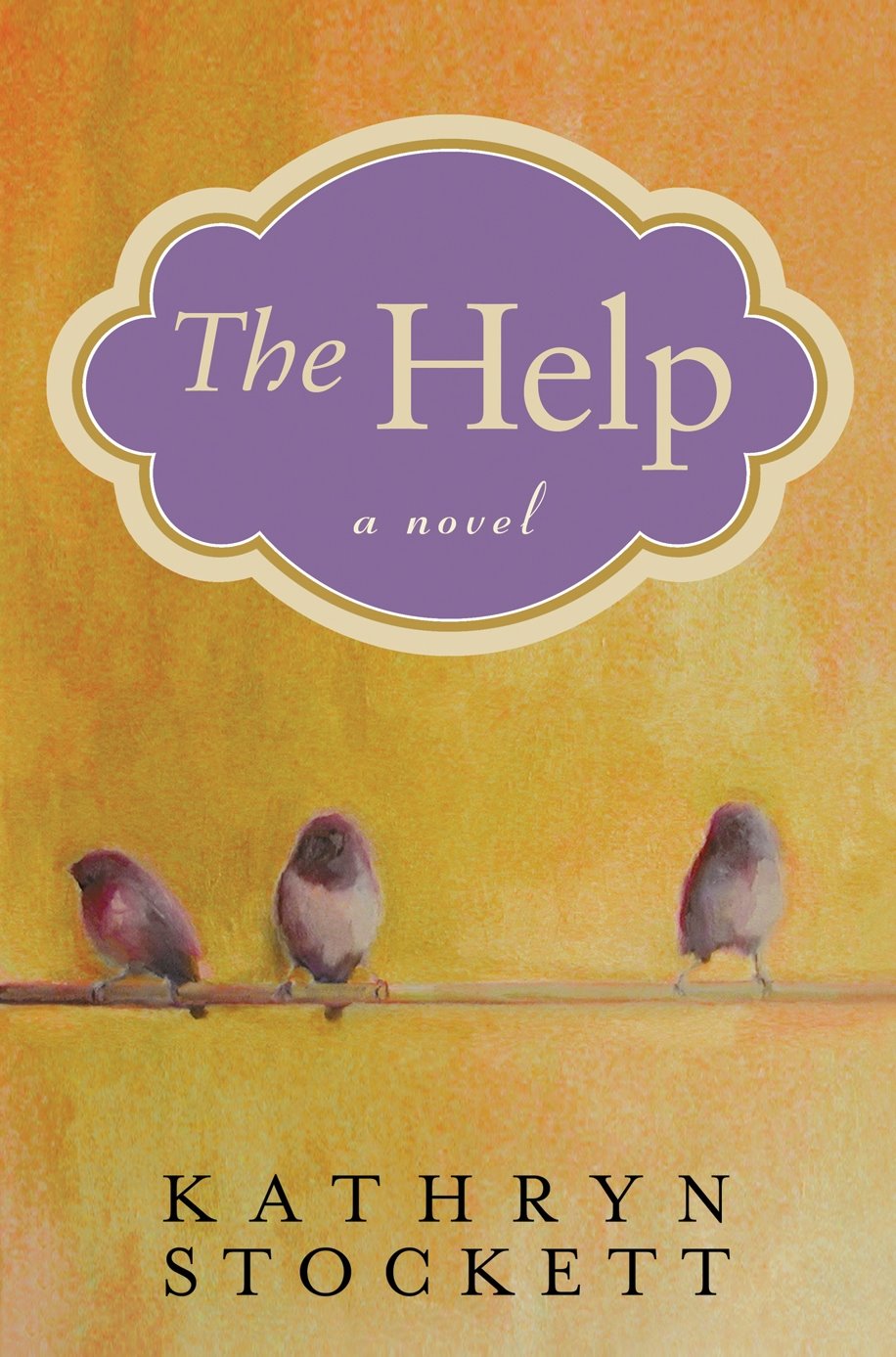
First-time author Kathryn Stockett, 39, did just that with her novel "The Help." But it wasn't as if Stocket just strolled up to the publisher and was handed a contract. She got 45 rejection letters from literary agents first. Forty-five. And perservered. And got a bestseller under her belt.
I haven't read "The Help," but after reading Chris Talbott's review of the novel for the Associated press (below), it's on my list...
First-time author scores unexpected best sellerBy CHRIS TALBOTT
Associated Press Writer
JACKSON, Miss. — Good thing Octavia Spencer is an actress. She needed all her stagecraft to hide a horrified look when her friend, Kathryn Stockett, asked her to read her new novel, "The Help."
Stockett told Spencer she based a character on her.
"My face just got hot," Spencer says, "and I thought, 'What are you talking about?'"
It got worse. The character was a short, loud black maid who spoke in a Southern dialect and never seemed able to keep a job because of her big mouth, which didn't go over well in the white neighborhoods of Jackson in the early 1960s.
"And I thought to myself, 'If this is Mammy from 'Gone With the Wind,' I am just going to call her and tell her,'" she recalls. "I think by Page 3, I realized what she was doing and I realized how intelligent these women were.
"Oh, honey, to me it's an amazing journey."
Reactions such as Spencer's are becoming common as "The Help," Stockett's debut novel, creeps up the best-seller lists after an early February debut. The premise of the book usually causes an immediate visceral reaction, especially if readers know Stockett is white. After a few pages, though, most readers are hooked.
Entertainment Weekly reviewer Karen Valby called the book's backstory potentially "cringeworthy" before giving it high praise and an A-minus. Industry standard Publishers Weekly gave it a starred review and in The New York Times, Janet Maslin called "The Help" a "button-pushing, soon to be wildly popular novel." Positive vibes are viral on the Web.
"It's exciting to see someone get this kind of attention for a first novel," Stockett's agent, Susan Ramer, says. "This is very rare."
Not bad for a manuscript that was shunned as Stockett shopped it to agents. She stopped counting at 45 rejection letters, but kept at it until Ramer snapped it up after reading a few pages. What others didn't see — or care to read — was immediately evident to Ramer.
"Reading it, you say, 'I've got to have this,'" Ramer says.
She was able to sell the book in a matter of days. Publisher Amy Einhorn chose it to launch her own imprint at G.P. Putnam's Sons.
"We editors like to say that the books we publish are wonderful," Einhorn says. "If we're being truthful, the fact is books of this level don't come along often. Everything I keep hearing from people is, 'I can't believe that's the first book you launched your imprint with because it's so amazing.' It was kind of a no-brainer."
"The Help" tells the story of three women during the formative years of the civil rights movement in Mississippi, where it was dangerous to push the boundaries of segregation for both blacks and whites — though for very different reasons.
So when black maids Aibileen and Minny begin to work with a white woman named Skeeter on a book about their experiences as domestic help, they fear retribution ranging from firings to beatings. For Skeeter, an awkward, hairdo-challenged University of Mississippi grad who has never had a boyfriend until midway through the novel, the penalty is ostracization from normal white Jackson society; she is branded as one of those "integrationists."
In a sense, it's a story of the movement behind the civil rights movement. But it is much more. At turns hilarious and heart-wrenching, the story feels like a pitch-perfect rendering of a time when black people weren't even second-class citizens in a state where anti-integration forces fought back with both restrictive laws and violence.
The 39-year-old Stockett was born in 1969, a few years after the novel's events. Her family had a maid named Demetrie, who helped raise Stockett before Demetrie died in the mid-1980s. It wasn't until much later that the author got a better understanding of the climate in which she grew up.
"I was young and dumb," she said in a recent interview from Los Angeles where she was on book tour.
"I'm so embarrassed to admit this ... it took me 20 years to really realize the irony of the situation that we would tell anybody, 'Oh, she's just like a part of our family,' and that we loved the domestics that worked for our family so dearly, and yet they had to use the bathroom on the outside of the house.
"And you know what's amazing? My grandfather's still alive, the house is still there. Demetrie died when I was 16, and I don't know that anyone else has been in that bathroom since then."
It is the issue of separate bathrooms that spurs Aibileen to help Skeeter with her book. She wants to keep her job and her reputation as a skilled surrogate mother but she can no longer live with the idea that the woman whose children she raises thinks she carries diseases that white people don't.
The stories that Aibileen and her friends tell Skeeter are funny, sad, poignant and terrifying, and are filled with consternation at the contradictory ways — and prejudices — of white people.
Mary Coleman, a political science professor at Jackson State University who grew up in the rural Mississippi town of Forest, found the author's portrayal of the relationships between white families and their black help authentic.
"I grew up in a community where tons of mothers provided domestic help to white families and the twists and turns of life in a largely segregated town could be learned sooner rather than later if there was a relative who worked in a white home," Coleman says. "We grew up understanding that the world looks very segregated physically speaking, but the lines or walls weren't as high as people imagined because of these whispered conversations in white homes that were, in fact, later heard in black homes."
The book also rang true to Vickie Greenlee, a 66-year-old travel agency owner, who has been a member of the Junior League for decades. Stockett skewers the Junior League of Jackson in "The Help." Its president, Miss Hilly, serves as the book's antagonist and its members, though genteel, steadfastly reinforce segregation — she starts a project that all good white Jackson families have separate bathrooms for blacks, for example.
Greenlee says the Junior League is very different today, but that Stockett captured the times well — well enough to raise a few eyebrows when Greenlee suggested they choose "The Help" for their book club.
"In describing the book to them, a couple of them said, 'Oooh, I don't know,'" Greenlee says. "But when they read it, they thought she did an excellent job. A lot of that was very relevant. And the relationships with our maids, we felt like they were part of our families. Then again they didn't take issue with us or didn't question what we did."
Stockett had no idea anyone would ever read the book when she started. She began writing it while taking a break from her job as a magazine consultant in New York City shortly after the terror attacks destroyed her hard drive and her previous attempts at fiction, which began when she majored in creative writing and English at the University of Alabama.
"We couldn't e-mail, we couldn't even make a telephone call, a land line or cell phone, for about two days, so I just got really homesick and really it had been a lot of years since I had spoken to Demetrie," Stockett recalls. "I remember wishing that I could just talk to Demetrie and hear her voice again. So I started working on this story ... trying to escape the media and all the mess on TV. It started as a short story and just continued on and on from there."
Stockett is continually surprised at the reaction to the book. It's one of those rare books that gets pushed by both small booksellers and the big chains. It's No. 1 on the Southern Independent Booksellers Association list and edged onto The New York Times and Publishers Weekly lists two weeks ago.
"I think it's because of this word-of-mouth phenomenon because people begin engaging one another in discussions about how they grew up, what their feelings were about race differences in the '60s and whether or not they relate to this kind of story," she says. "I've gotten so many e-mails from readers who are sharing their stories."

 But you'll have to cough up $32 just to hear her speak for 45 minutes (and that doesn't include the book.) I think it's a bit steep - hit book and movie or not.